Stay Nimble
AI-powered career coaching platform that helps users discover their skills, find better-paid work, and navigate career changes with confidence
Opportunity
Users from disadvantaged backgrounds struggled to find career paths that matched their skills and values. They needed guidance, not just job listings.
The Team
Product Designer, 2 Developers, Career Coaches, Data Analyst
Wins
- Grew user base from 1,000 to 11,000 users (1,000% growth)
- 78% increase in retention with clear jobs-to-be-done
- 87% of users engaged with career recommendations
- 43% increase in career coach pairings
The Career Change Paradox
Career changers face a cruel irony: they know they want something different, but they don't know what that something is. They're told to "follow their passion" or "leverage their skills"—but what if they don't know what those are?
Our users came from disadvantaged backgrounds, stuck in low-wage jobs, desperate for change but paralyzed by uncertainty. They didn't need another job board. They needed discovery, guidance, and a path forward.
"I know I want something better, but I don't even know what I'm good at. Where do I start?"
— Stay Nimble MemberThe Outcome
An AI-powered career coaching platform that helps users discover their skills, find better-paid work, and navigate career changes with confidence.
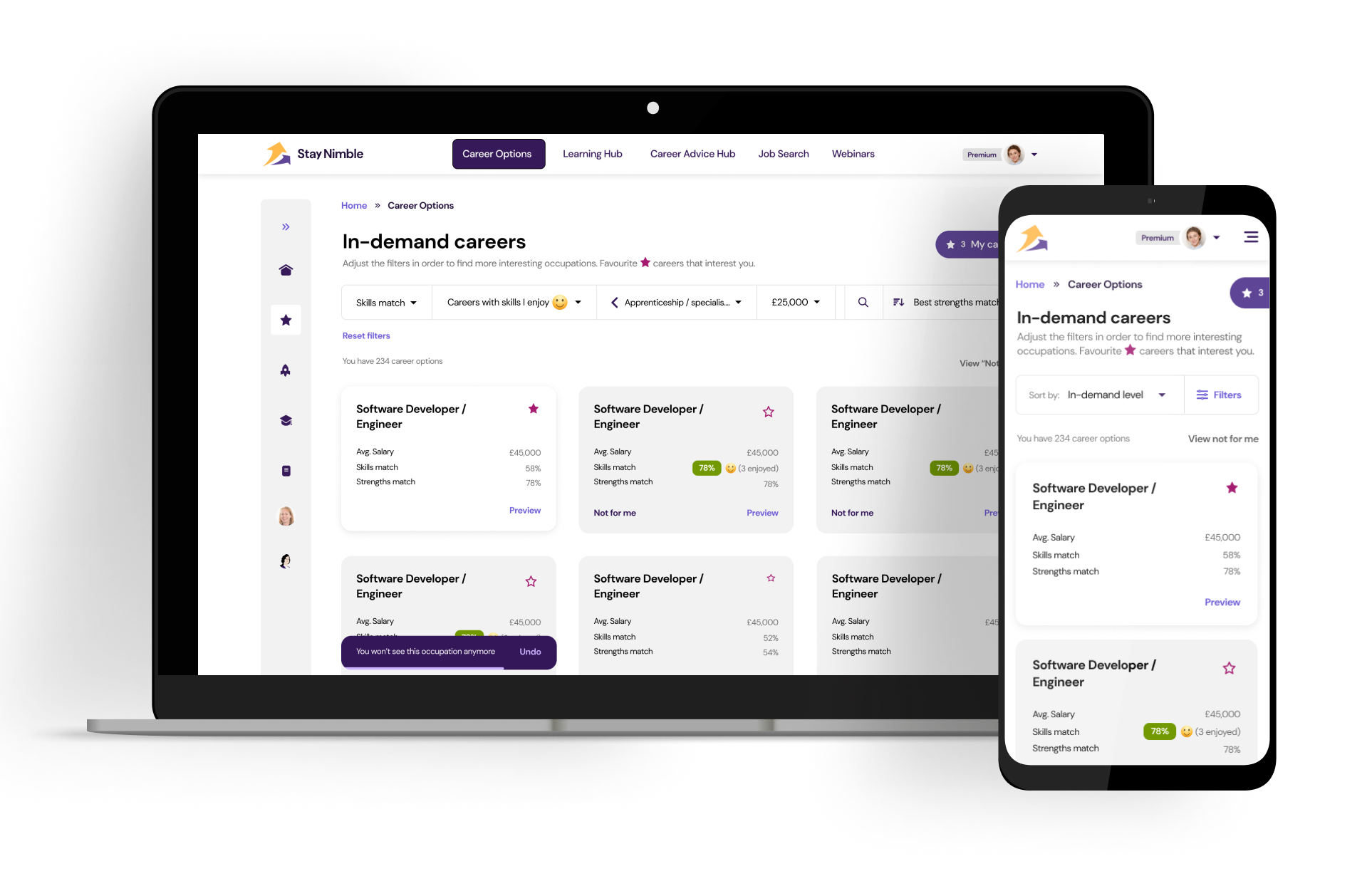
Scroll to find out how we did it
The Discovery
Understanding the Emotional Journey
"I know I want something better, but I don't even know what I'm good at. Where do I start?"
— Stay Nimble MemberResearch Methods:
- Deep-dive interviews with 20+ active members
- Analysis of 5,000+ user interactions and drop-off points
- Collaboration with human career coaches who understood our users intimately
Key Insight: Users weren't just looking for jobs. They were searching for professional identity—trying to understand who they were and where they could fit.
Three Critical Problems Emerged:
The Discovery Problem
Users couldn't effectively search, filter, or compare careers. The exploration process was broken and overwhelming.
The Rejection Problem
Users knew which careers they never wanted, but had no way to express this in the product to improve recommendations.
The Data Silo Problem
Users had already expressed skills and preferences in other platform journeys, but this data wasn't being used for career matching.
Competitive Research
Learning from Adjacent Spaces
Career recommendation was an underserved space—no direct competitors had solved this well. I looked to adjacent industries for inspiration.
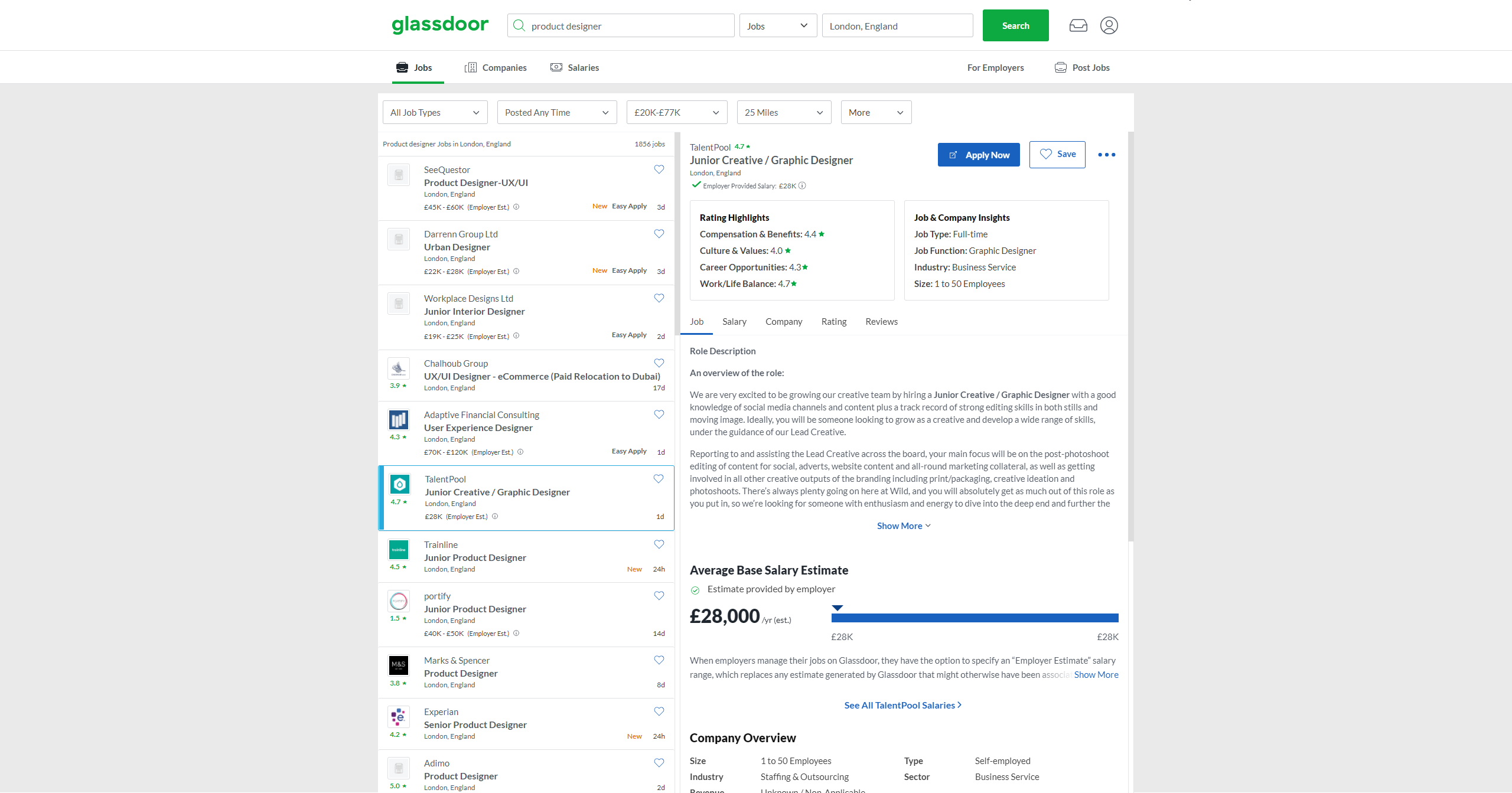
From Glassdoor:
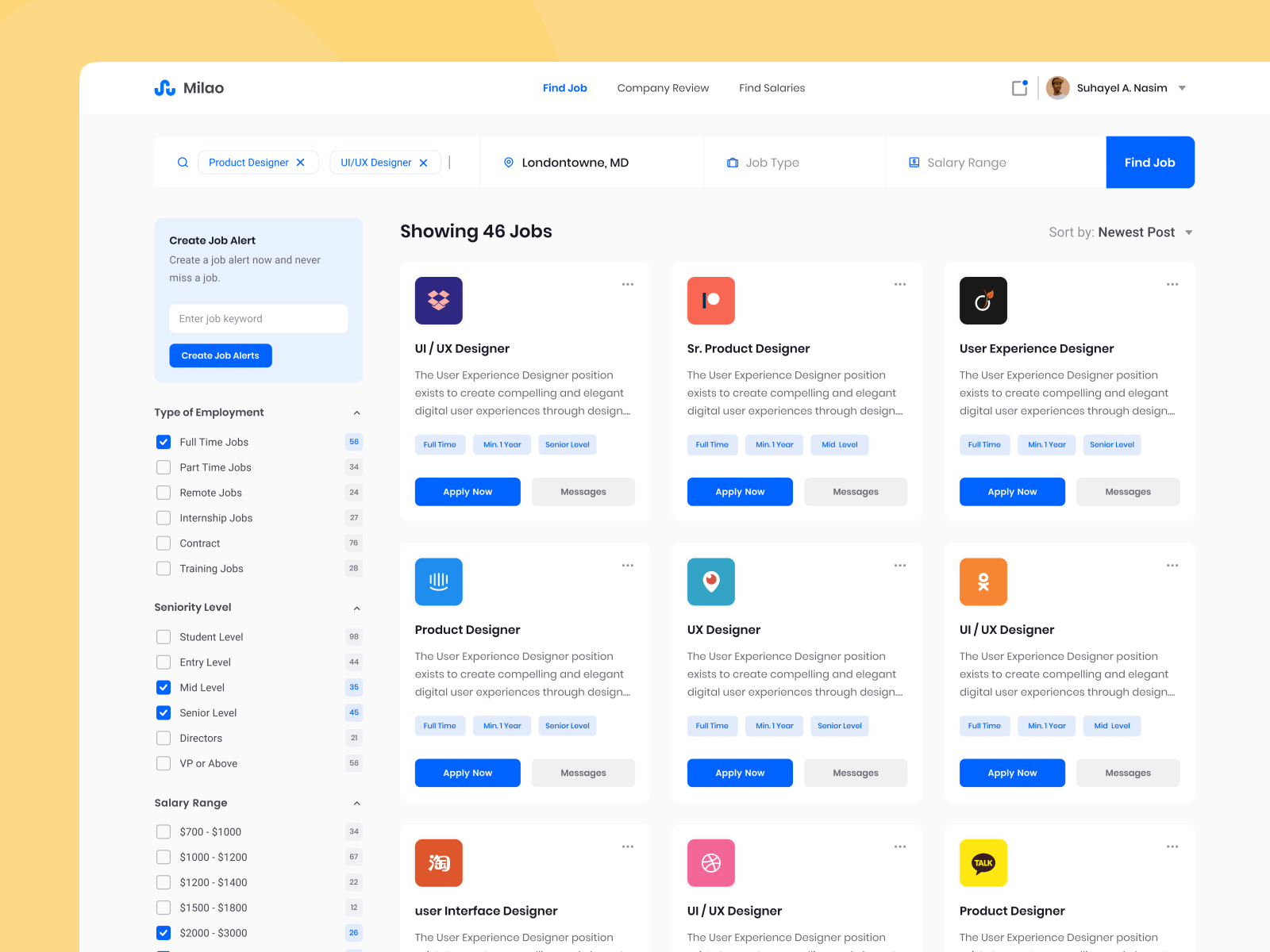
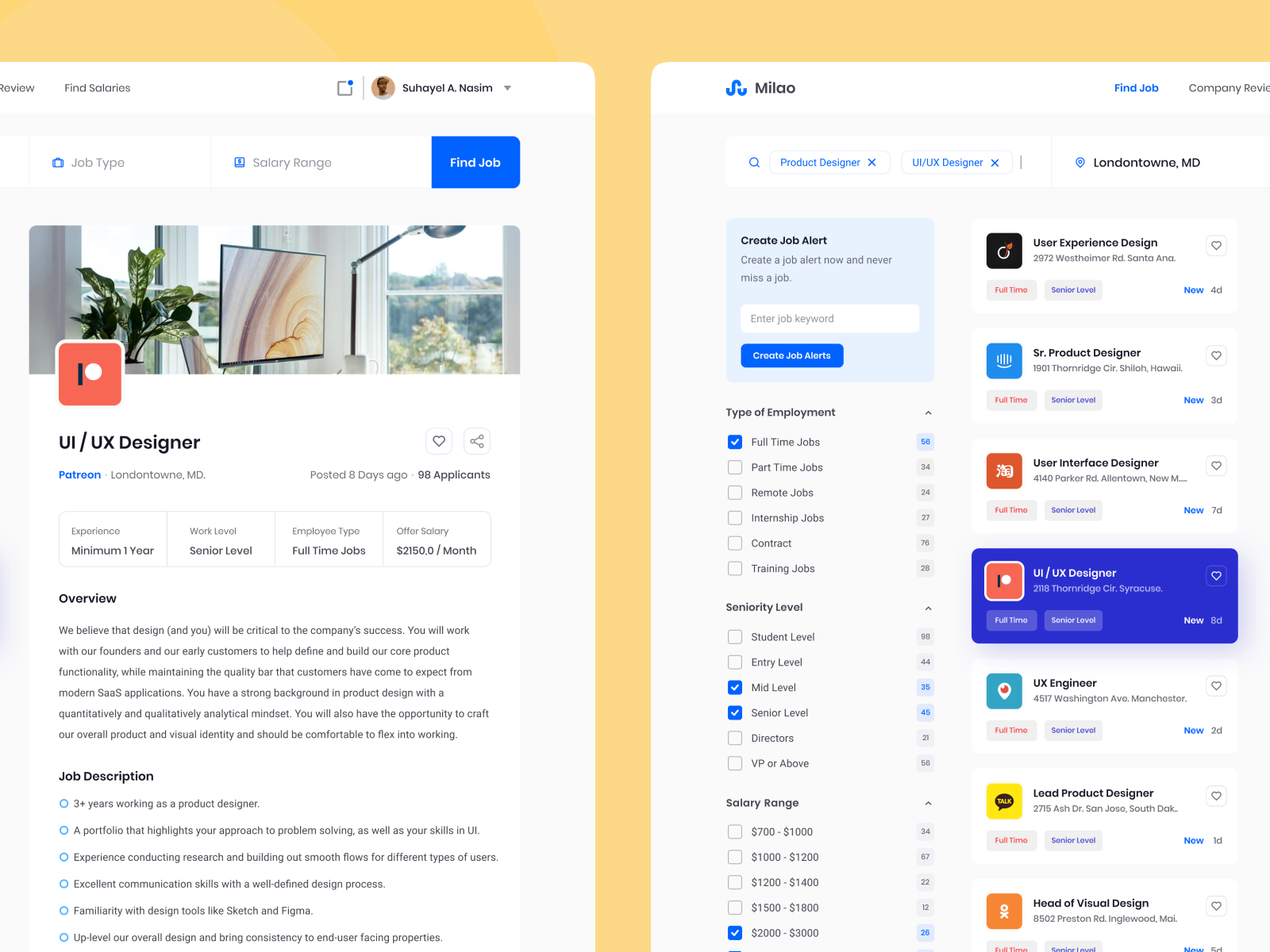
- Job preview cards that surface key information before users commit to deep exploration
- Company context and culture indicators that help users make informed decisions quickly
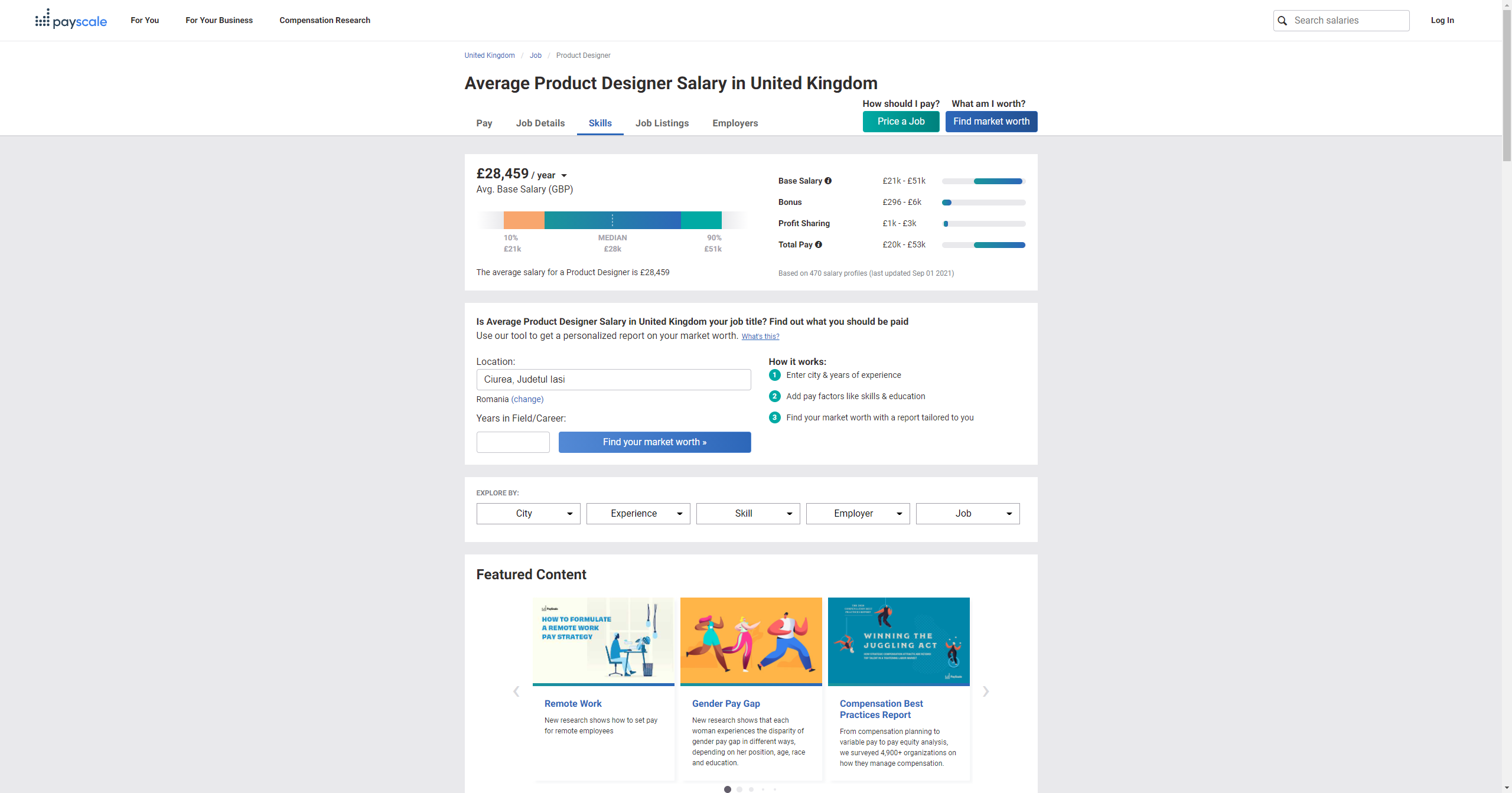
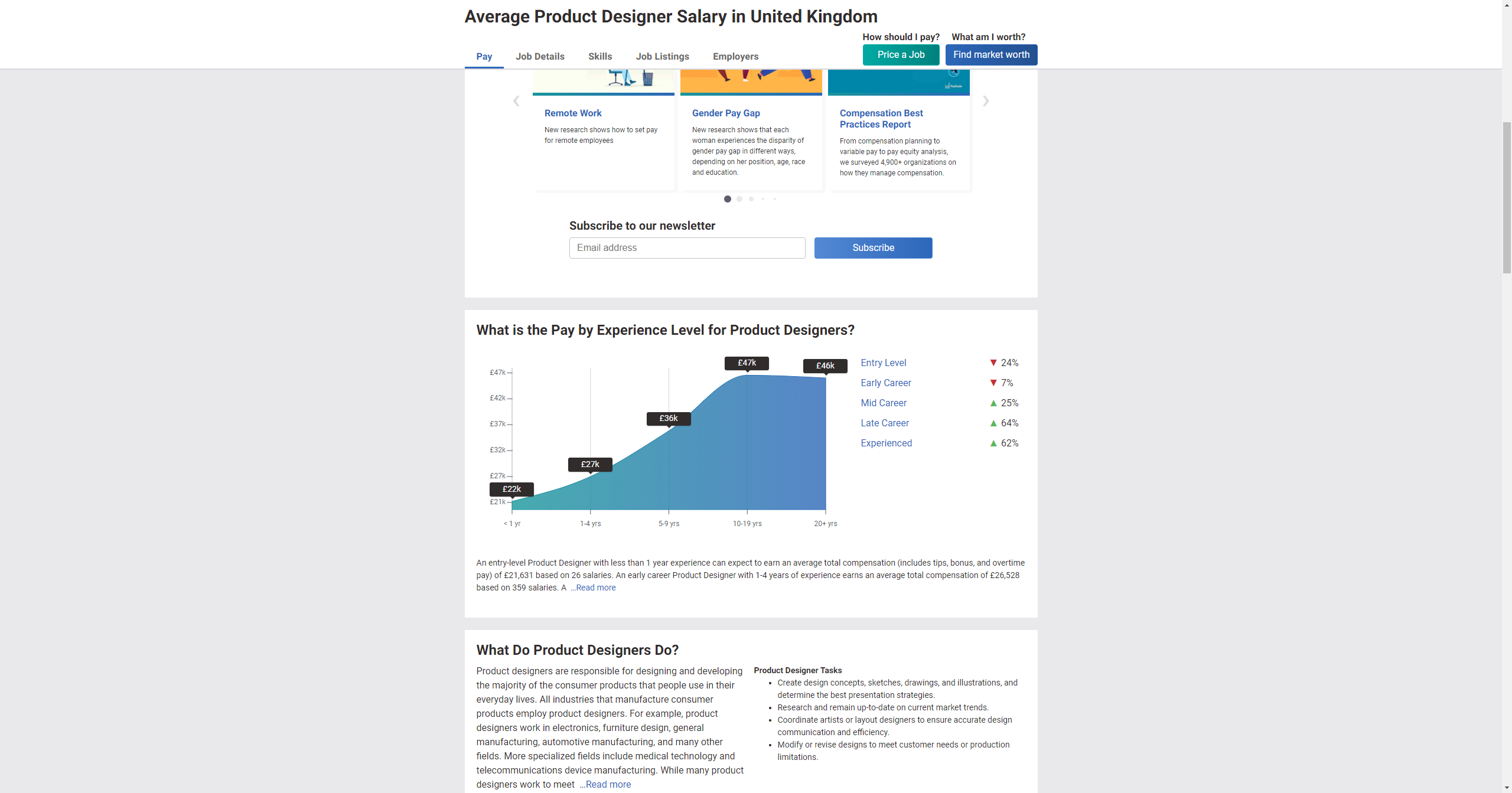
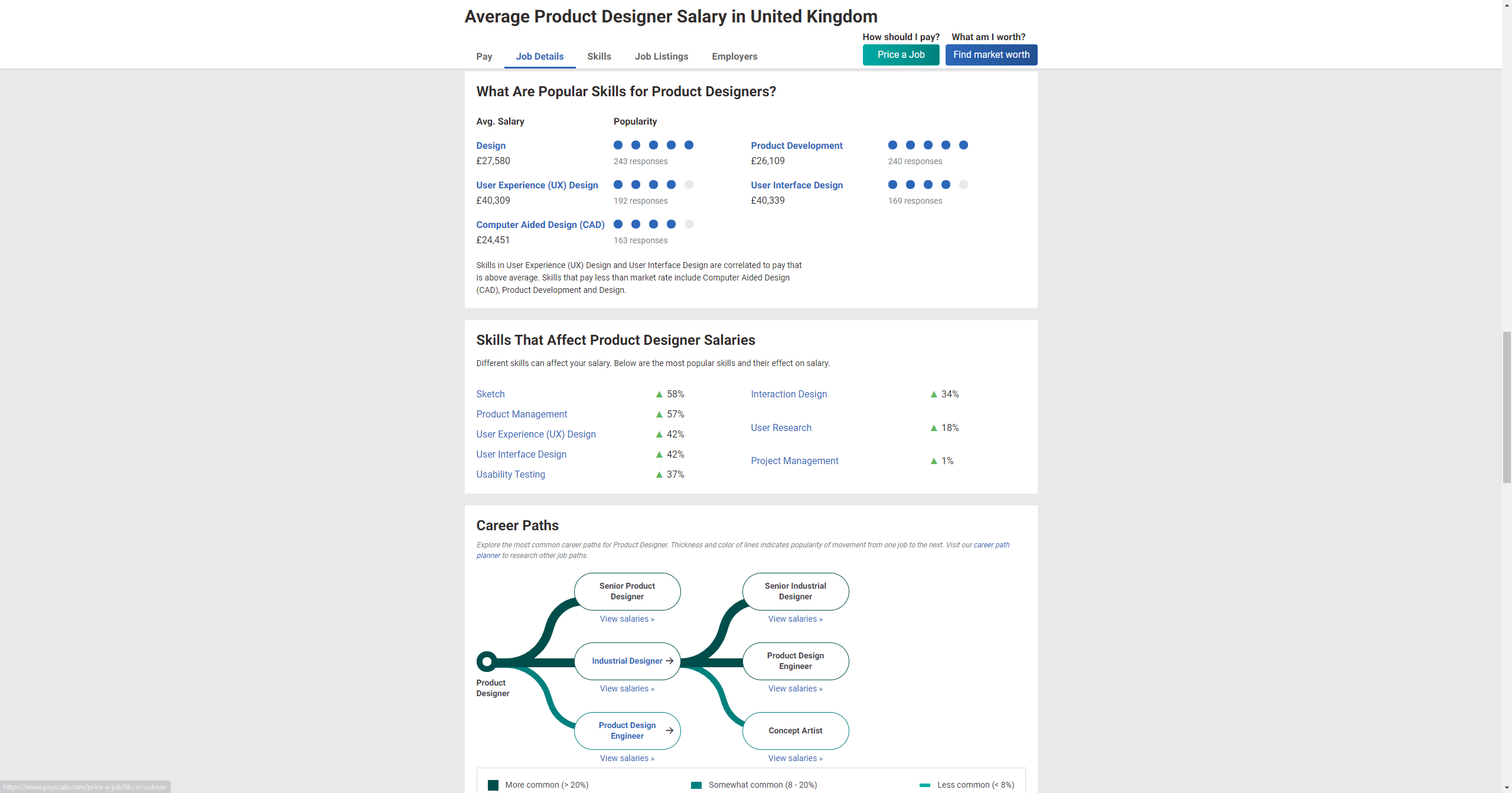
From Payscale:
- Salary visualization across experience levels (entry to senior)
- Job satisfaction scores and role explanations
- Skills-to-career mapping showing progression paths
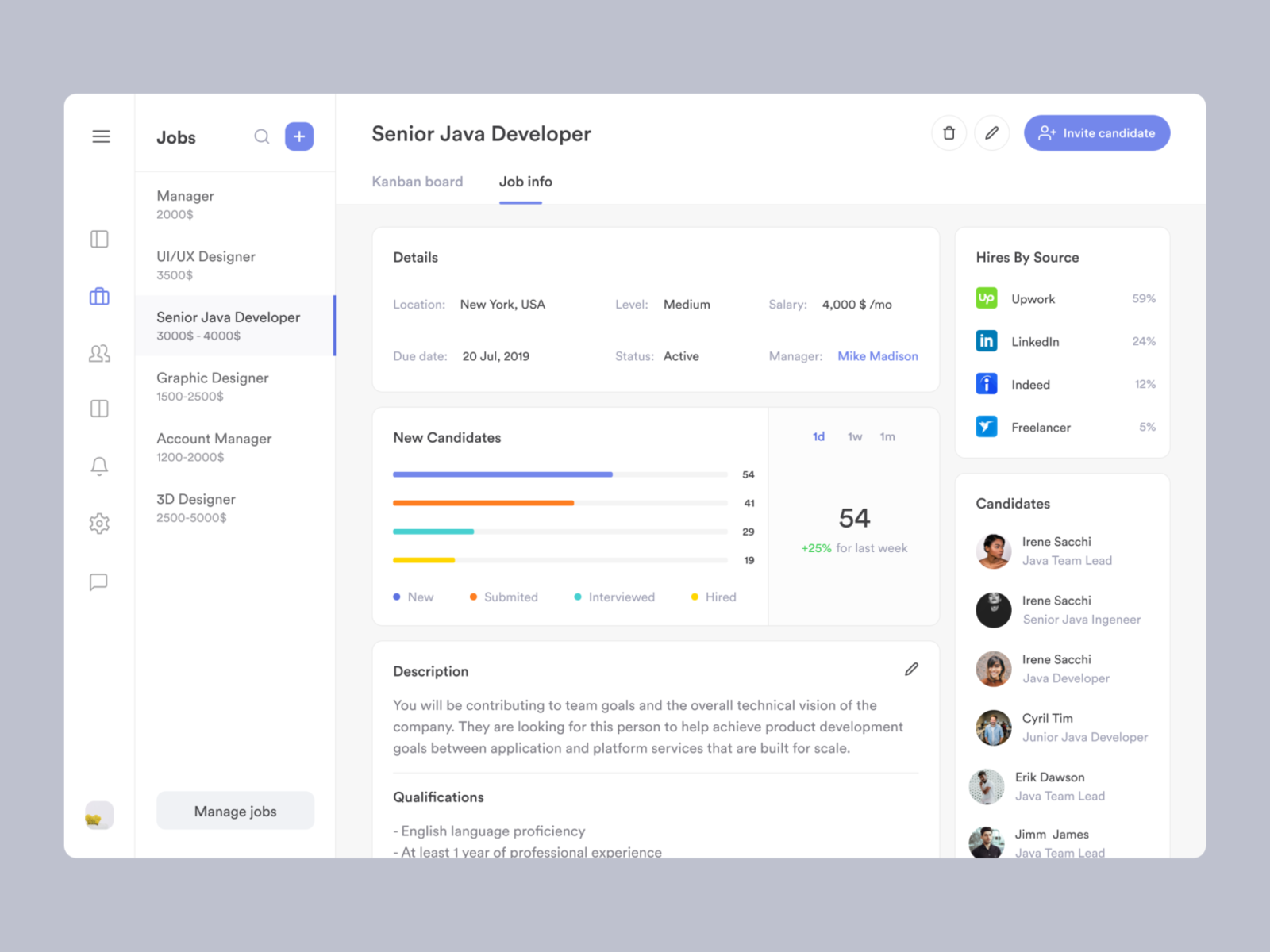
Design Inspiration: Explored Dribbble and Behance for innovative ways to present complex career data—focusing on patterns that made information digestible without sacrificing depth.
The Design Solution
Designing with Data Constraints
The Challenge: Most career data came from external sources with significant limitations:
- Skills mastery timelines were estimates (months to years)
- Single data source created accuracy risks
- Market changes took months to reflect in the data
Design Constraint: I had to design around data we couldn't control. The UI needed to handle uncertainty gracefully—showing confidence levels where data was weak, and being transparent about limitations.
Information Architecture
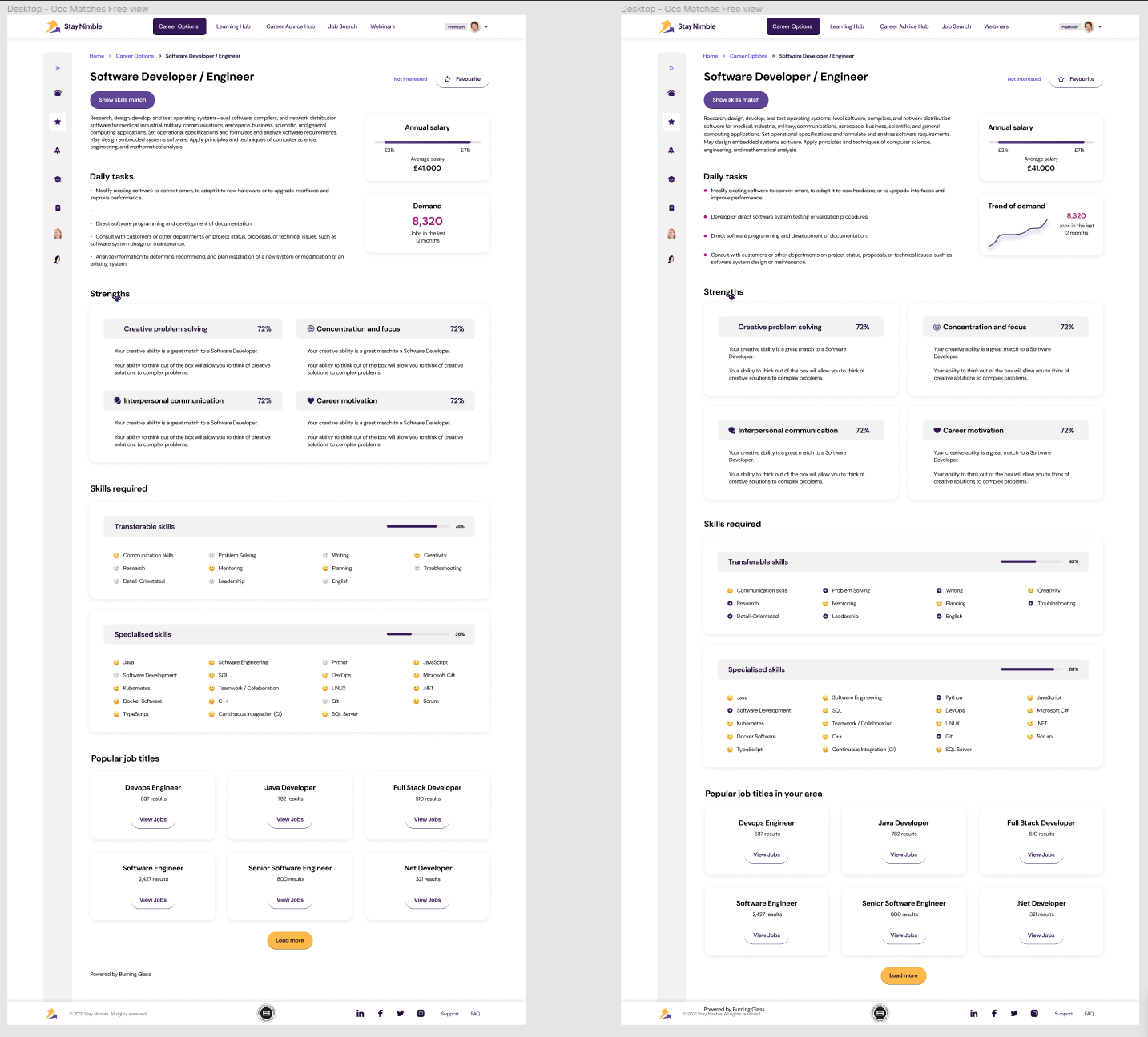
Working with career coaches, I defined what members actually looked for when evaluating careers:
Salary Trajectory
Clear salary ranges across experience levels, from entry to senior
Job Satisfaction
Real satisfaction scores and "day in the life" insights from people in the role
Career Progression
Where this role can lead—lateral moves, promotions, and skill development paths
Skills Alignment
How their existing skills match, and what gaps they might need to fill
Progressive Disclosure Strategy
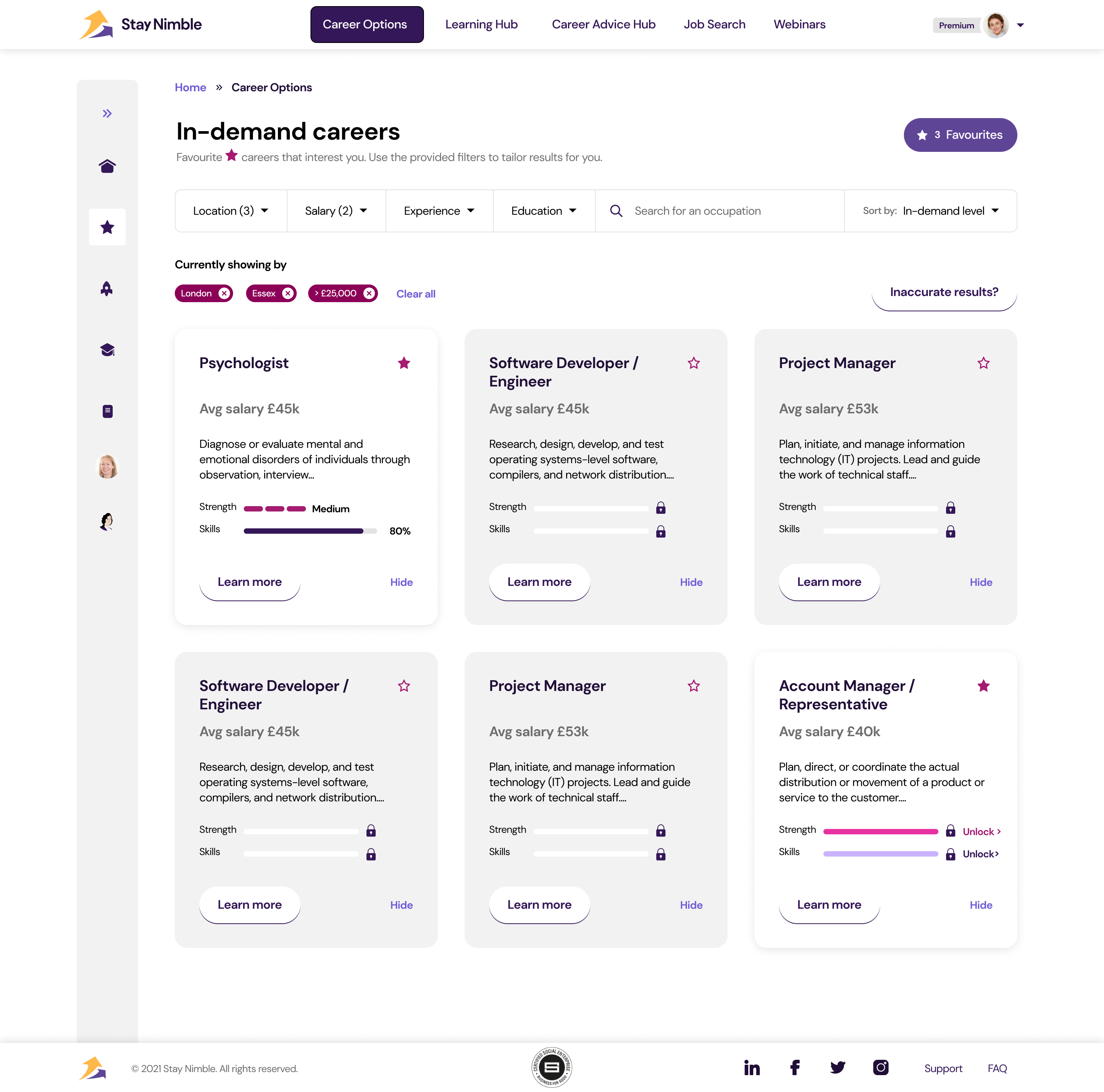
Not all data could be free. I designed a tiered experience that felt helpful, not restrictive:
Free Discovery
Browse careers, see basic info, and save interesting roles. No barrier to exploration.
Personalized Matches
Skills integration unlocks personalized recommendations based on assessment data.
Full Guidance
Deep insights, salary data, and direct coach pairing for subscribed members.
Validation & Iteration
Testing with Real Users
With 5,000 active members, I recruited users who had favourited roles for testing. Sessions were booked via Calendly and conducted remotely.
Testing Approach:
- Quantitative scorecards for measurable usability metrics
- Miro boards for qualitative feedback and idea generation
- Task-based scenarios mirroring real usage patterns (finding a career, comparing options, saving favorites)
Key Findings
Users immediately understood the career matching concept. The step-by-step approach reduced cognitive overload. Skills integration felt "magical" when it surfaced unexpected but relevant career paths.
Iteration Based on Feedback:
- Added "Not for me" option to improve recommendation algorithm
- Simplified salary visualization after users found original version confusing
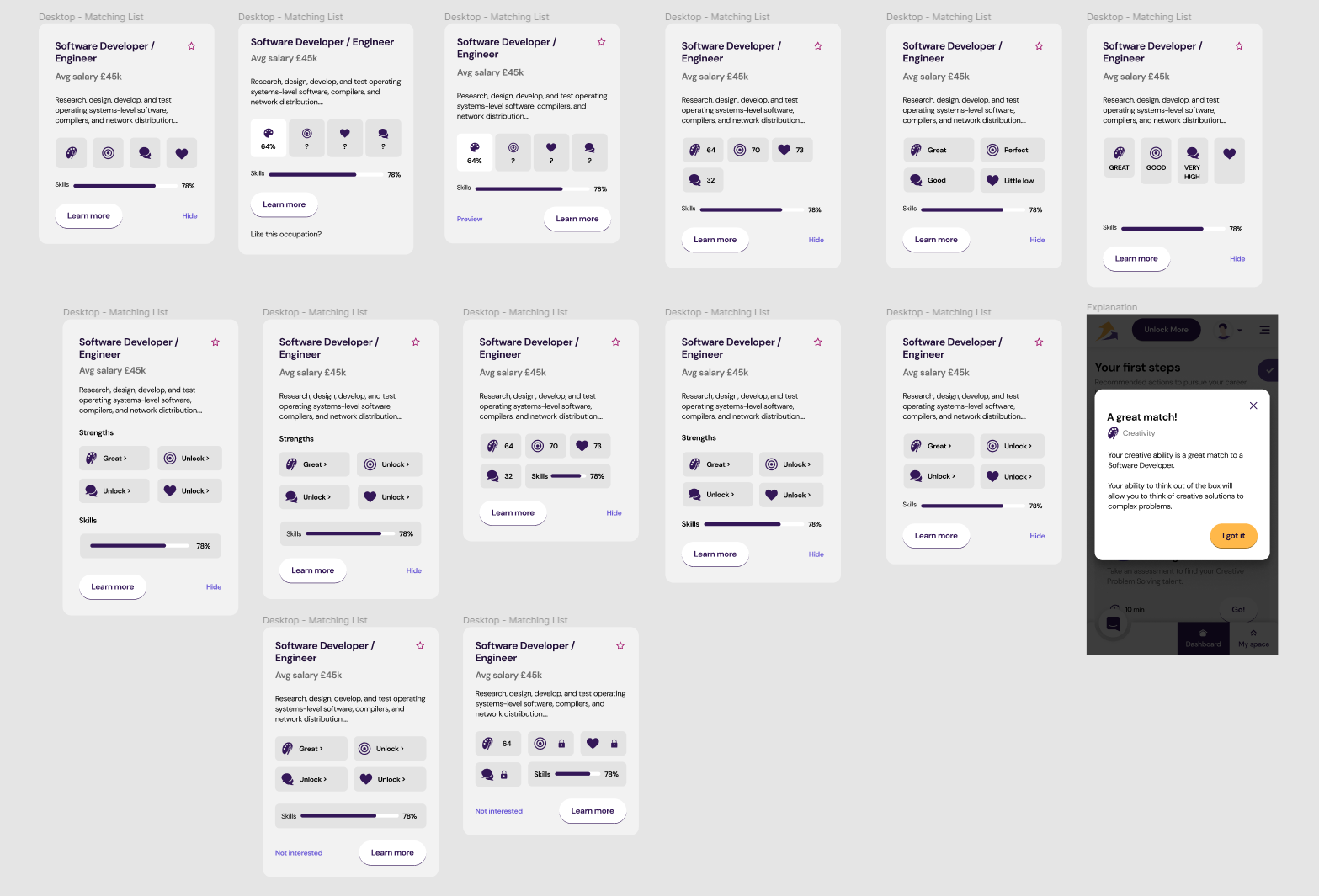
- Increased prominence of skills match indicators—they were the primary decision driver
Impact & Results
From Launch to Scale
After developer handoff, QA, and phased rollout, the results exceeded our targets.
The Human Impact
The most meaningful feedback wasn't in the metrics—it was in the messages. Users told us how the recommendation engine changed their perspective on what was possible.
What We Learned
Celebrate Progress
Bite-sized steps with achievement moments kept users motivated through long, uncertain career transitions.
Connect the Data
Skills assessment data powering career recommendations created a "magical" experience—users felt truly understood.
Human + AI
Career coaches provided insights no algorithm could. The product amplified their expertise, not replaced it.
From Stuck to Nimble
Stay Nimble transformed career change from a daunting leap into a guided journey. By combining behavioral psychology, data science, and human coaching, we didn't just help people find jobs—we helped them discover who they could become.
The platform grew 1,000% because it solved a real problem: the paralyzing uncertainty of not knowing where to start. We gave users a starting point, a path forward, and the confidence to take the first step.
"I never considered UX design, but seeing my skills match and the salary potential... I'm enrolling in a course next month. This platform gave me a direction I didn't know existed."