Changing the narrative from a data tool to a preferred workflow
A real-time fraud investigation platform that turned a passive intelligence tool into the primary workflow for fraud teams — weekly active users up 12x from a low base, ML accuracy up 78% through a decision feedback loop, and detection time down from two weeks to same-day, sometimes live.
RoleLead Product Designer
Timeline6 months
TeamProduct Designer (me) · Product Manager · 3x Engineers · ML Engineer · Compliance teams
User ResearchMachine LearningDesign StrategyFeedback LoopFraud Intelligence
Final Designs
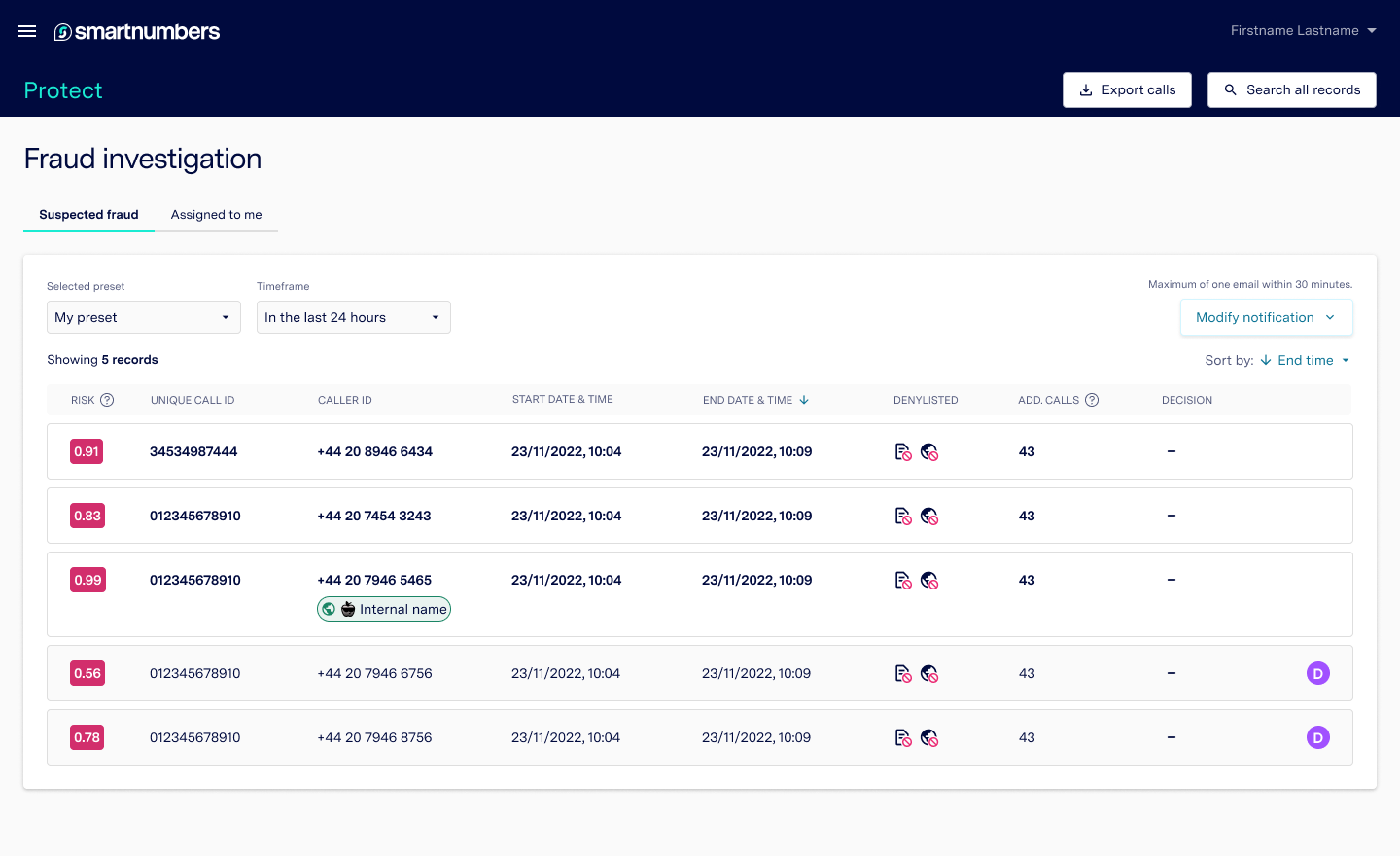
The investigation queue — from search-and-explore to a daily active workflow.
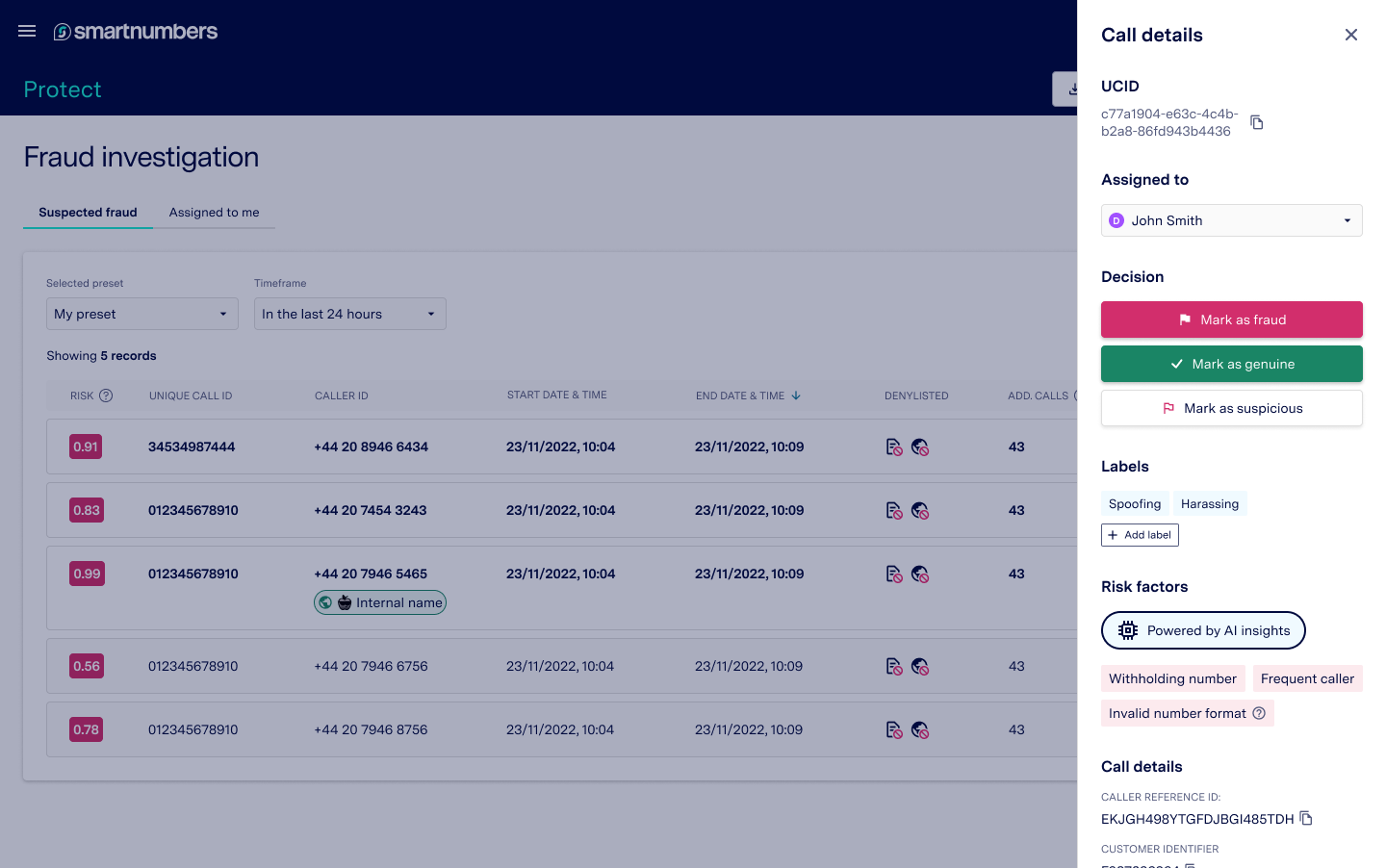
The three-state classifier — fraud, genuine, suspicious — feeding the decision feedback loop.
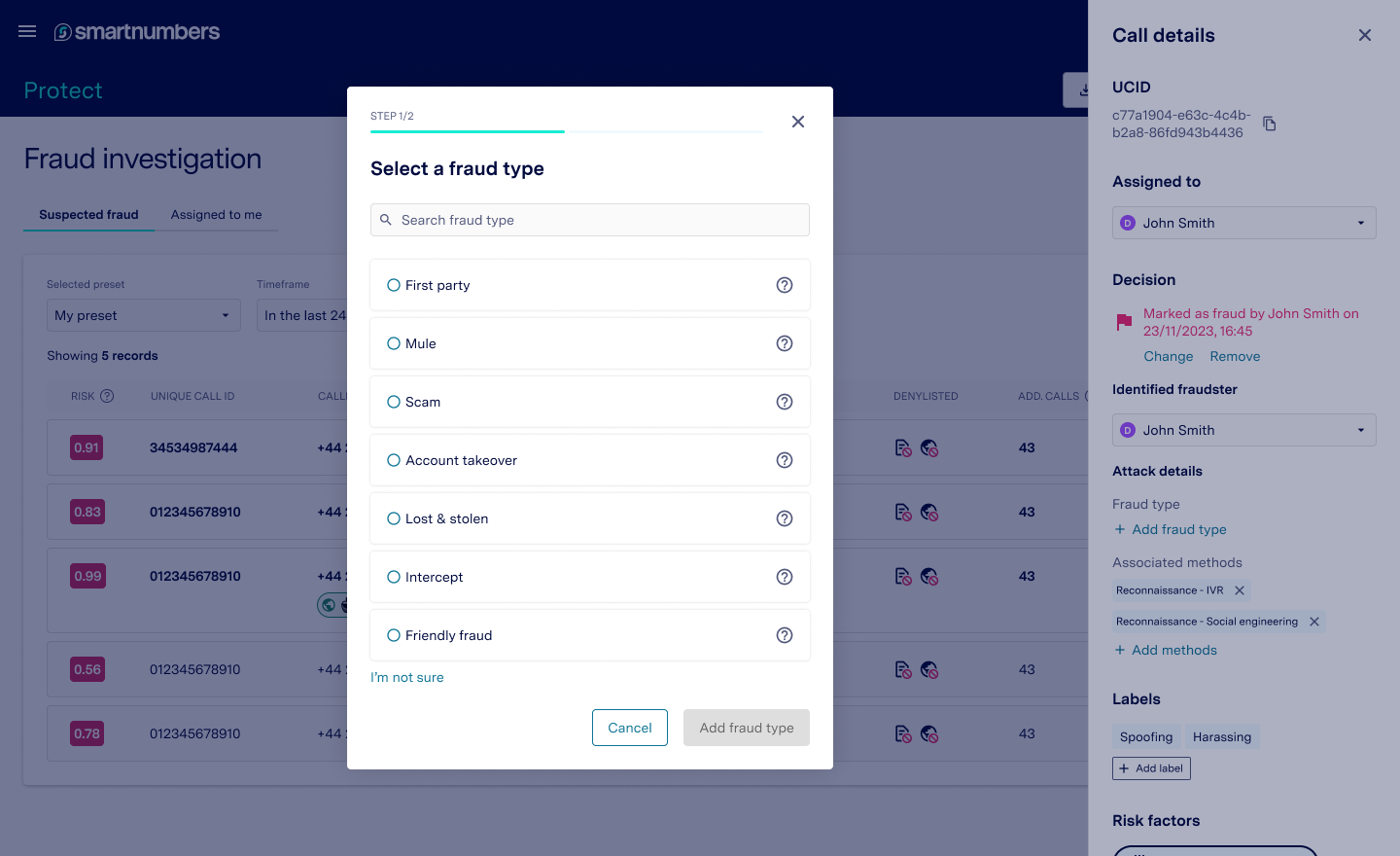
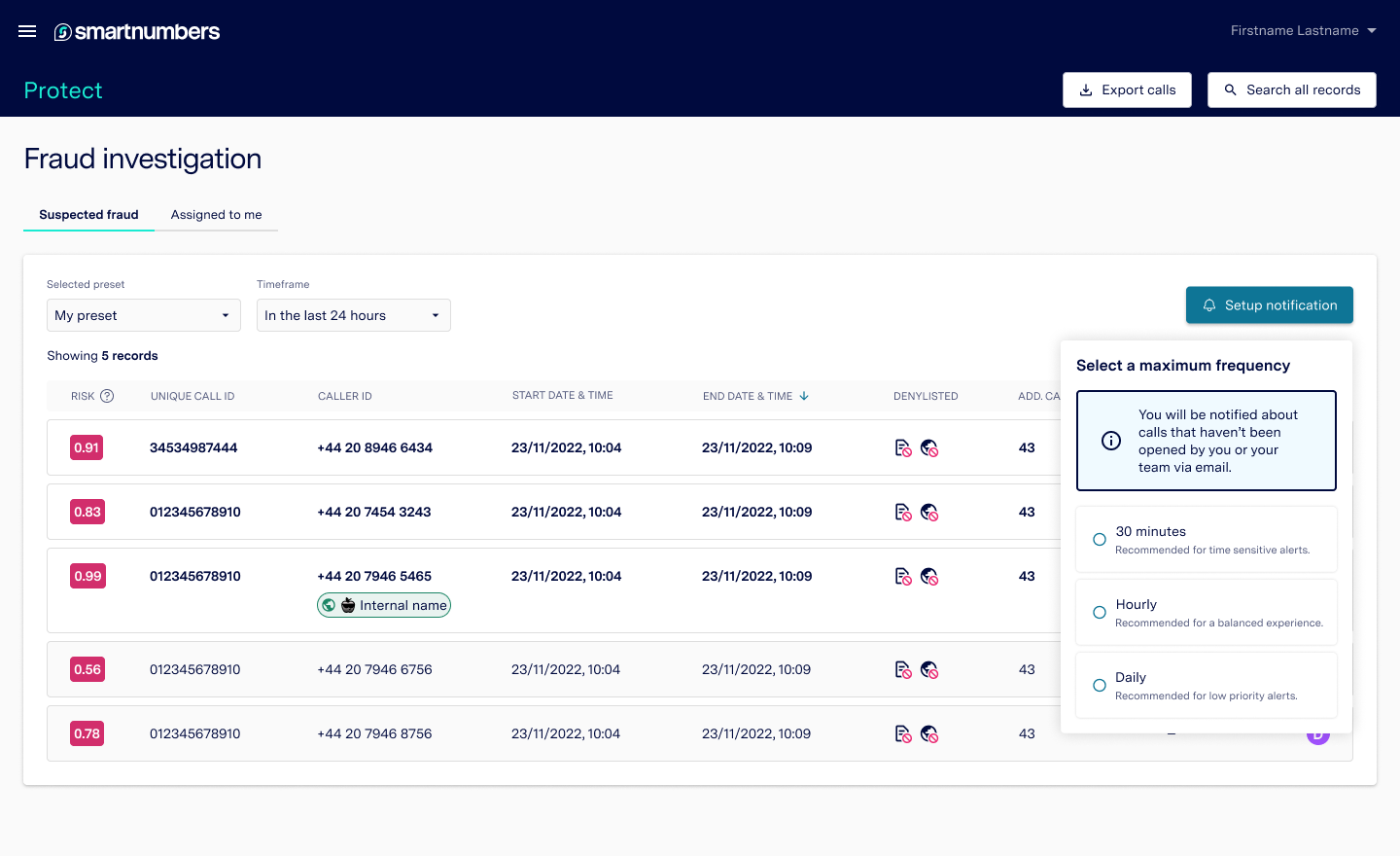
Configurable alert conditions: investigators control what lands in their queue.
The investigation queue — from search-and-explore to a daily active workflow.
The three-state classifier — fraud, genuine, suspicious — feeding the decision feedback loop.
Configurable alert conditions: investigators control what lands in their queue.
12xIncrease in weekly active users
78%Accuracy improvement
Same-dayDetection time (formerly 2 weeks)
01
About Smartnumbers
Smartnumbers is a fraud intelligence company serving telecommunications and financial institutions. The platform connects fraud intelligence across organisational boundaries — transforming isolated call data into actionable insight. With hundreds of thousands of fraud decisions captured, Smartnumbers helps investigators detect and prevent fraud in real time, before funds leave the business.
02
The Problem
This was one of the first impact points I had at Smartnumbers. When I joined, the product was search-and-explore only: investigators could look at data, but not act on it. There was no feedback loop, so the machine learning model never improved from real decisions. Investigators logged in a couple of times a week at most, duplicating work across other tools because there was nowhere to record an outcome. The product was positioned as "intelligence": supplementary, not primary.
I designed the proposal to become a fraud intelligence workflow rather than a data tool.
03
My Role
I owned discovery, UX strategy, design, and the decision-feedback-loop architecture, embedded with product and engineering as the only designer on the team. I designed the three-way classifier, the alert configuration layer, the notification batching system, and the denylist (a list of numbers known to be operated by fraudsters) interaction pattern.
04
Discovery
A quick note: There are multiple different tools a fraud investigator will use throughout their investigation. Their customer relationship management platforms, voice biometrics (think "my voice is my password"), and referrals from call handlers. Each organisation have these foundational blocks, but will use different vendors based on their budgets.
I started by shadowing investigators in their offices, sitting by their shoulders while they worked, not hearing a cleaned-up version in a research call. I wanted to understand and map out the journey of an investigation and noting the tools they used, and their literacy. I wasn't planning to re-create what they aleady do, I wanted to define our unique value proposition and design ontop of that.
It was important I avoided designing for one customer. We only had a handful of customers. I attended numerous fraud conferences to conduct research without our product knowledge, joined sales calls to understand the problems an organsation is seeking to solve, and used User Interviews to source out qualified candidates for more intimate discovery.
The insight: they already used historical calls to judge whether something was fraud or genuine. Time told them. But that judgement was trapped in their heads or scattered across other tools, while the product held intelligence no other platform had, and gave them nowhere to apply their expertise to it.
Insight
Investigators already knew how to judge fraud from genuine: that judgement was trapped in their heads. The product had intelligence no one else had, and nowhere for that expertise to go.
Usage data backed this up: engagement was flat. Users came in, searched, left. No state, no progress, no reason to return. If the product could capture that investigator judgement — fraud, genuine, suspicious — it would do three things at once: track real usage, feed the machine learning model, and let investigators skip work they'd already done.
05
Design Decisions
A three-way classifier, not true/false
Instead of a binary call, I designed a three-state decision (fraud / genuine / suspicious) so investigators could record confidence and partial signals. This gave the model richer training data and let users build a history of what they'd already reviewed.
The core mechanism the whole feedback loop runs on.
The core mechanism the whole feedback loop runs on.
From "explore" to "work through"
The original interface was built for search. I redesigned the narrative around action — review calls, mark them, move on — turning a search box investigators had to populate themselves into a queue grouping connections no other platform could surface.
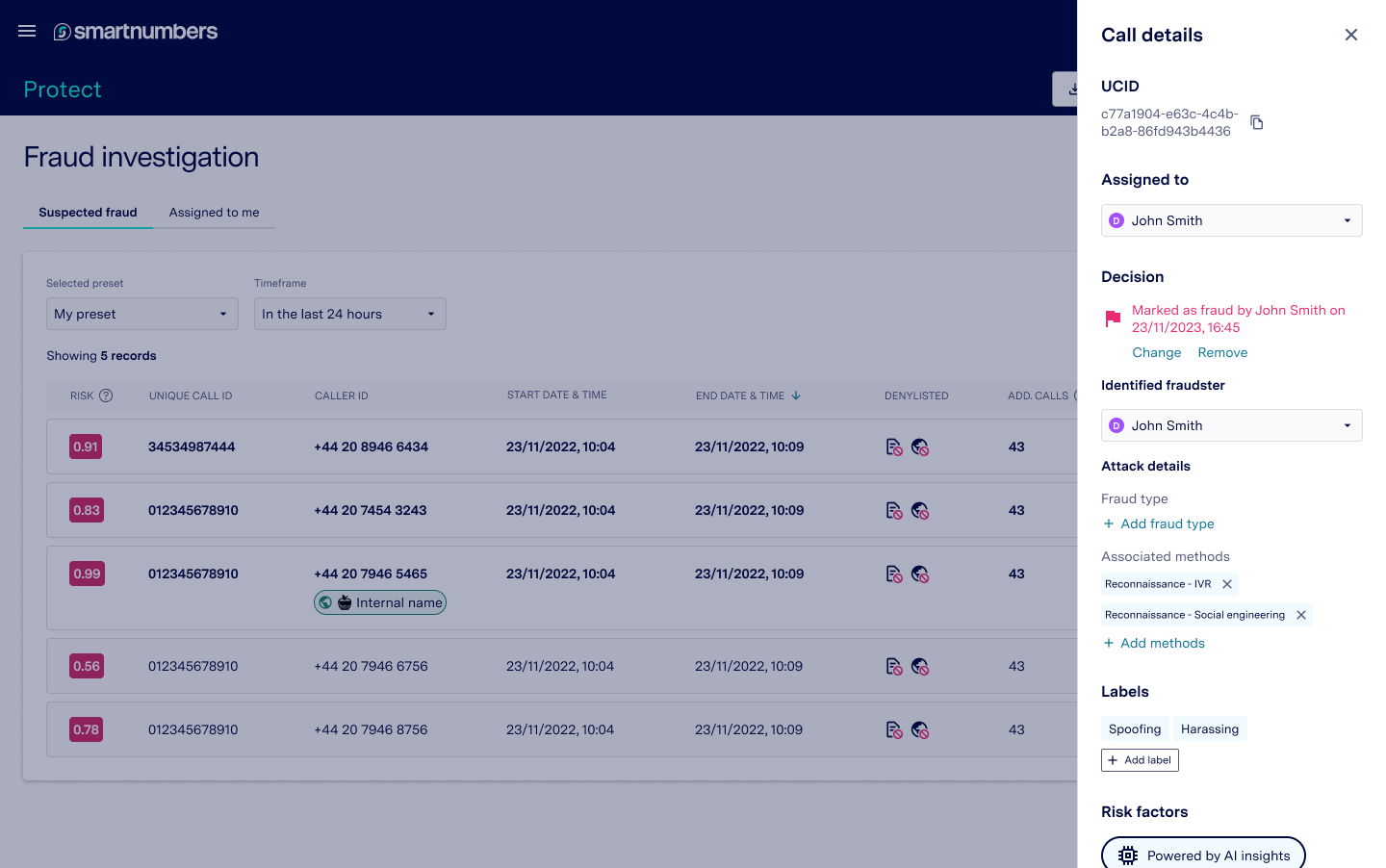
An investigator adding intelligence linked to a call.
An investigator adding intelligence linked to a call.
Alert conditions investigators controlled
We initially set standard alert conditions ourselves — logical, and wrong (more on that below). The fix was a configurable layer giving investigators control over what triggered an alert, especially where their own organisation already automated certain conditions without exposing the underlying model logic or IP. I ran offline experiments with users to shape how much of that logic could be surfaced safely.
The fix for the default-feed mistake: control without exposing the model.
The fix for the default-feed mistake: control without exposing the model.
Notification batching that respected attention
To cut noise, the system sent one alert the first time a configured condition was met, then batched further alerts into 30-minute, hourly, or daily intervals depending on user preference. Before any batch went out, we checked whether those calls had already been worked by anyone in the organisation. If so, the batch was suppressed. No duplicate alerts, no wasted attention.
A denylist as a human override
The machine learning model was a weak link: fraudsters adapt to evade detection. I added a local, tenant-level denylist: when an investigator (or an automation rule) added a number to it, that signal instantly jumped to the highest risk score. Fast, human-overrideable, immediately effective: a safety valve the model itself couldn't provide.
Every decision feeds the model
Each fraud/genuine/suspicious classification fed back into the machine learning pipeline. The 78% accuracy improvement came from this loop: not a better algorithm alone, but better-labelled data from investigators using the product as part of their daily work.
06
What I Got Wrong
I assumed investigators would want to work from a standardised alert feed, so we built a sensible default condition set covering common scenarios. It was logical, and it was wrong.
Warning
I assumed investigators wanted a standardised alert feed. It was logical, and it was wrong. They already had alerting elsewhere; our feed sat largely unused.
Investigators already had alerting elsewhere and only came to Smartnumbers to check for intelligence; our feed sat largely unused, even though daily logins stayed steady.
Digging into support tickets and user calls gave a consistent message: the default alerts were too noisy, duplicating signals investigators had already filtered elsewhere. I worked with the Product Manager to pivot from "here's your alert feed" to "here's your configured queue", designing the configurable condition layer and exposing controls so users shaped what landed in front of them. That shift moved the product from occasional passive use to a daily active workflow.
Impact
The Pivot: from "here's your alert feed" to "here's your configured queue." That shift moved the product from occasional use to a daily active workflow.
07
What I'd Do Differently
Design for configurability from the start, rather than recovering into it after low engagement
Map the alert ecosystem investigators already live in before building a first default feed
Make the feedback loop visible to users, so they understand how their judgements improve the model over time
08
Delivered Results
12xIncrease in weekly active users
78%Accuracy improvement
Same-dayDetection time (formerly 2 weeks)
The product's narrative shifted from "intelligence tool" to investigators' primary platform.
From Reactive to Predictive
Smartnumbers Investigate transformed how fraud teams operate, from chasing yesterday's fraud to stopping today's. By combining real-time flagging with intelligent decision capture, we built a learning system that gets smarter with every investigation.